

How We Study Moose in Wisconsin
Hidden Moose of Wisconsin uses long-term field research to document and understand moose across the state. Because moose are rare, wide-ranging, and often unseen, the work depends on consistent observation over time rather than isolated sightings.
Our Research Approach
Research is built from multiple sources of field evidence, including:
-
Trail cameras placed in northern Wisconsin landscapes
-
Field observations and habitat surveys
-
Verified public reports
-
Physical evidence such as tracks, browse, antlers, and bedding sites
Each observation is reviewed and verified before being incorporated into long-term datasets that track moose presence over time.
Over time, patterns begin to emerge—patterns that cannot be seen in single sightings alone.
Our Research Focus

Wildlife Research & Monitoring
Trail cameras and field observations document moose presence, behavior, and seasonal movement across Wisconsin’s northern landscapes.
Moose Distribution & Residency
Mapping where moose are observed and identifying patterns of repeated or seasonal presence that may indicate residency.


Data Analysis & Reporting
Long-term datasets are analyzed to identify trends in movement, behavior, and habitat use, contributing to broader ecological understanding.
Collaboration & Knowledge Sharing
Findings are shared with researchers, agencies, and conservation partners to support broader understanding of moose in the region.

Research in Action
This work is built on years of consistent field presence across northern Wisconsin.
Over time, it has produced:
-
Multi-year observation records
-
Verified photographic evidence
-
Expanding geographic coverage of sightings
-
Documented seasonal activity patterns
-
Long-term datasets focused on moose presence
Each piece of data adds to a clearer understanding of where moose are and how they use the landscape.
Why It Matters
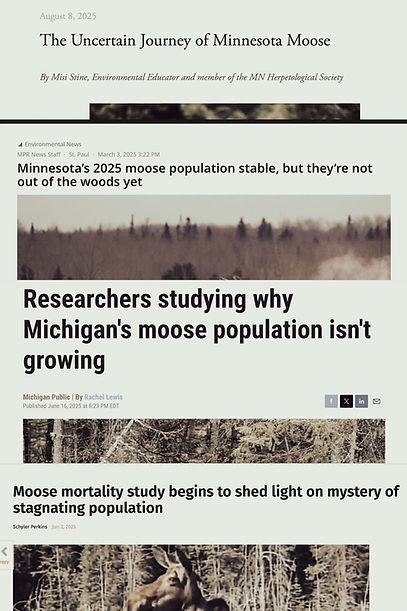
Wisconsin sits at the southern edge of North America’s moose range, where populations are sparse and not well studied.
Moose in the Midwest face challenges, especially in neighboring regions, and Wisconsin’s population is small and easy to overlook. But that does not mean they are absent—or that their presence is insignificant.
Long-term monitoring helps reveal patterns that isolated sightings cannot—showing where moose are present, how they move across the landscape, and how they interact with their environment over time.
By consistently gathering and analyzing verified observations, Hidden Moose of Wisconsin builds a clearer understanding of long-term presence and habitat use in the state. This work relies on careful documentation, scientific rigor, and respect for data privacy.
This research supports public understanding and contributes to broader scientific knowledge of moose at the edge of their range.
